 SANTOKU
 SANTOKU
-
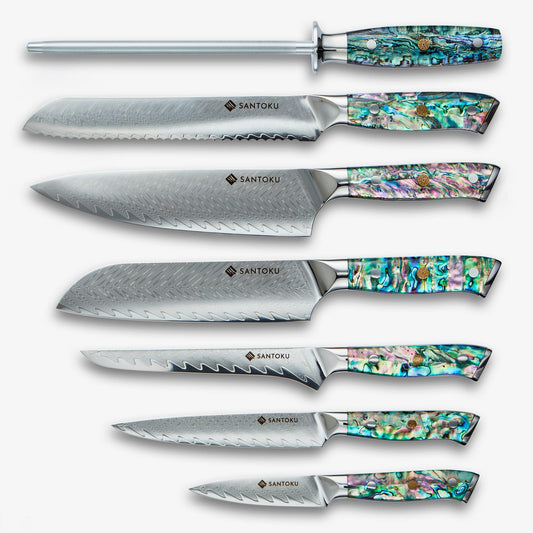
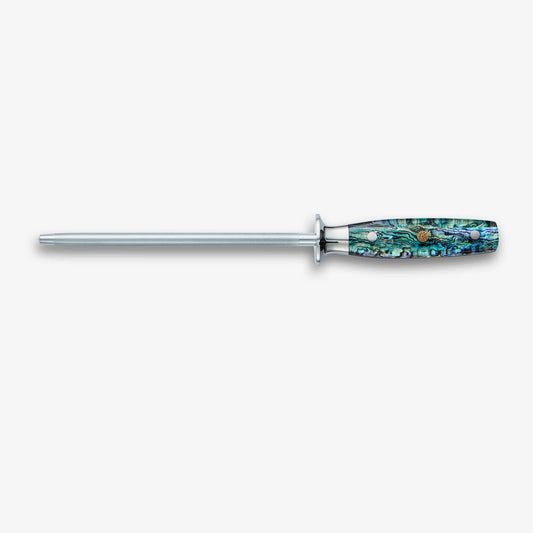
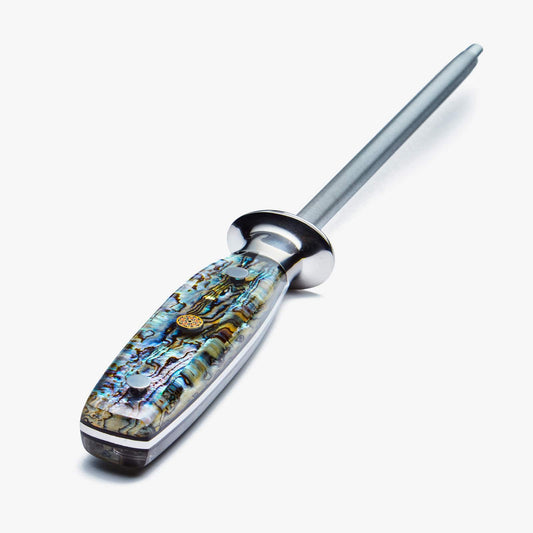
Chikashi Damascus Steel Knife Set With Abalone Handle
Regular price £424.99 GBPRegular priceUnit price per£614.93 GBPSale price £424.99 GBPSale -
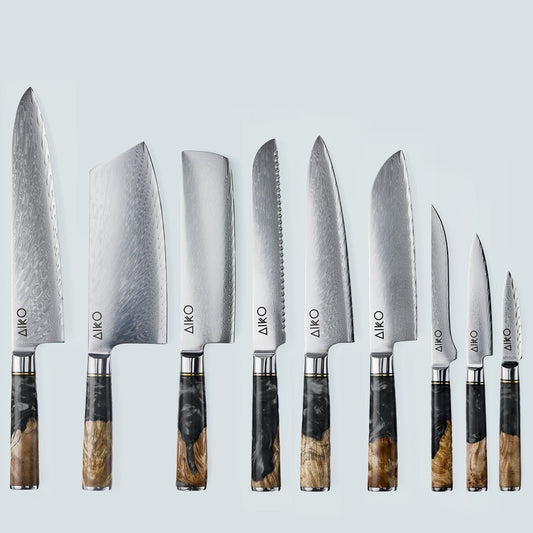
Aiko Black Damascus Steel Knife with Coloured Black Resin Handle
Regular price From £64.99 GBPRegular priceUnit price per£219.97 GBPSale price From £64.99 GBPSale -
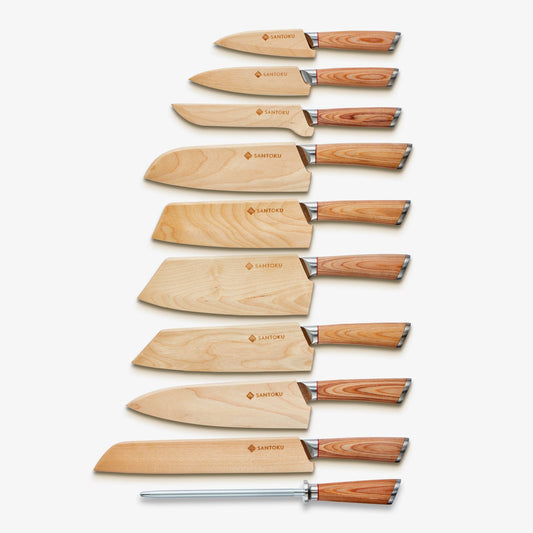
Haruta 10-Piece VG10 Japanese Damascus Steel Kitchen Knife Set with Wooden Handles & Scabbards
Regular price £499.99 GBPRegular priceUnit price per£799.90 GBPSale price £499.99 GBPSale -
Aiko Blue Damascus Steel Knife with Coloured Blue Resin Handle
Regular price From £64.99 GBPRegular priceUnit price per£219.97 GBPSale price From £64.99 GBPSale -
Ichika Damascus Steel Knife with coloured Octagonal Handle
Regular price From £79.99 GBPRegular priceUnit price per£399.95 GBPSale price From £79.99 GBPSale -
Makito Damascus Steel Knives With Coloured Blue Resin Handle
Regular price From £69.99 GBPRegular priceUnit price per -
Aiko Red Damascus Steel Knife with Coloured Red Resin Handle
Regular price From £64.99 GBPRegular priceUnit price per£219.97 GBPSale price From £64.99 GBPSale -
Chikashi 8 inch Chef Knife
Regular price £96.99 GBPRegular priceUnit price per -
Haruta 8 Inch VG10 Japanese Damascus Steel Gyuto Chef Knife with Wooden Handle & Scabbard
Regular price £89.99 GBPRegular priceUnit price per -
Haruta 7 Inch VG10 Japanese Damascus Steel Santoku Knife with Wooden Handle & Scabbard
Regular price £89.99 GBPRegular priceUnit price per -
Haruta 5 Inch VG10 Japanese Damascus Steel Utility Knife with Wooden Handle & Scabbard
Regular price £69.99 GBPRegular priceUnit price per -
Chikashi 7 inch Santoku Knife
Regular price £96.99 GBPRegular priceUnit price per -
Haruta 7.7 Inch VG10 Japanese Damascus Steel Nakiri Cleaver with Wooden Handle & Scabbard
Regular price £89.99 GBPRegular priceUnit price per -
Haruta 8 Inch VG10 Japanese Damascus Steel Kiritsuke Chef Knife with Wooden Handle & Scabbard
Regular price £89.99 GBPRegular priceUnit price per -
Haruta 4 Inch VG10 Japanese Damascus Steel Paring Knife with Wooden Handle & Scabbard
Regular price £64.99 GBPRegular priceUnit price per -
Haruta 10 Inch VG10 Japanese Damascus Steel Bread Knife with Wooden Handle & Scabbard
Regular price £89.99 GBPRegular priceUnit price per -
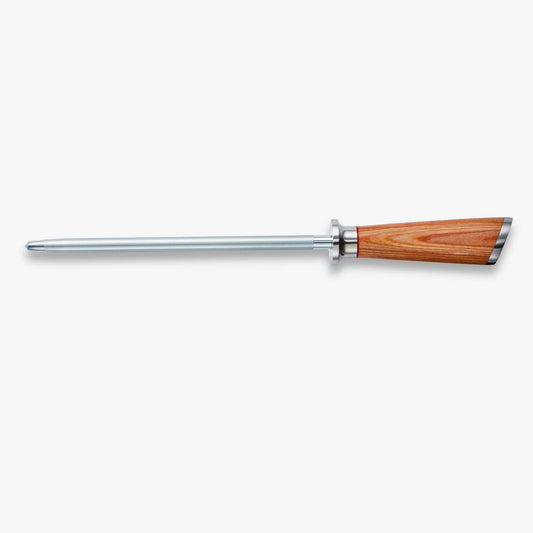
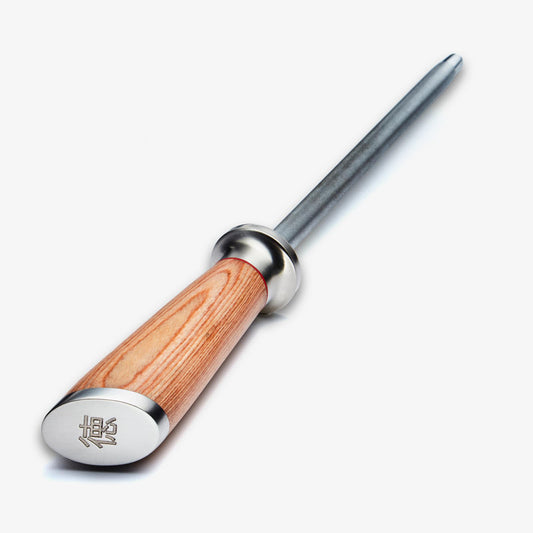
Haruta 13 Inch Diamond Sharpening Steel for Knife Maintenance
Regular price £54.99 GBPRegular priceUnit price per -
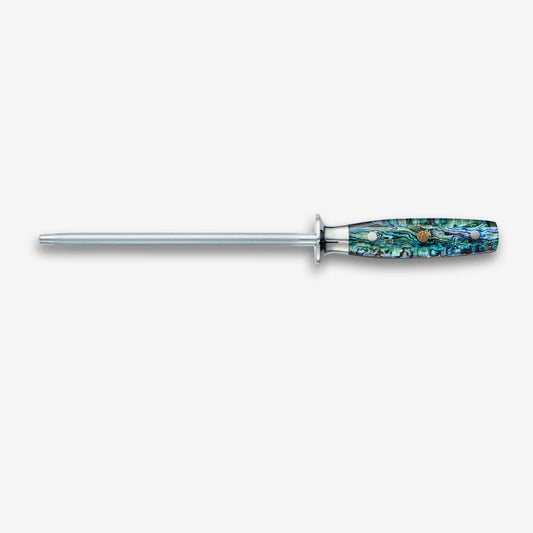
Chikashi 13 inch Sharpening Steel
Regular price £59.99 GBPRegular priceUnit price per -
Chikashi 3.5 inch Fruit Knife
Regular price £79.99 GBPRegular priceUnit price per -
Chikashi 5 inch Utility Knife
Regular price £91.99 GBPRegular priceUnit price per -
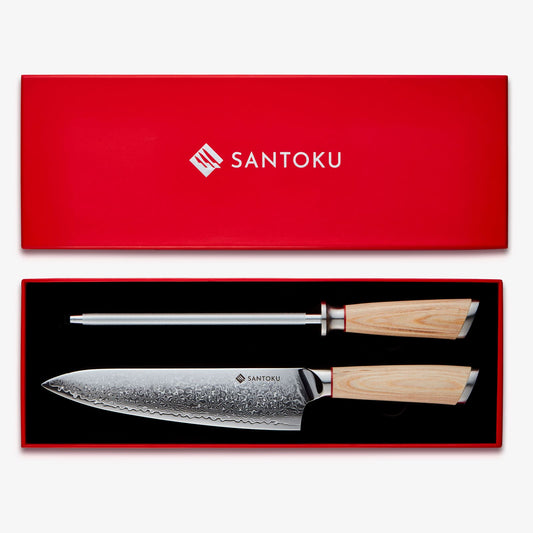
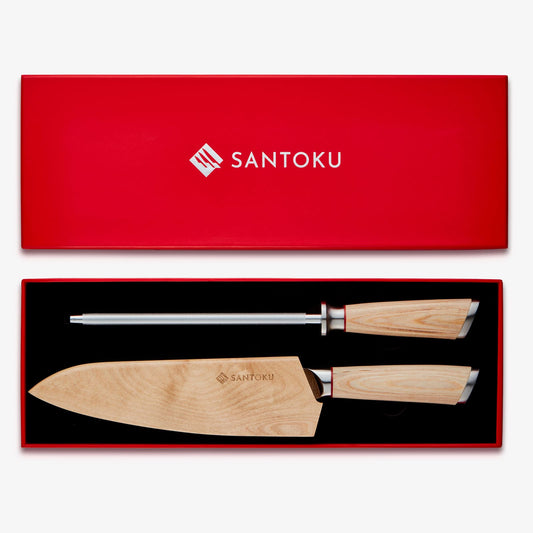
![Haruta Box Set VG10 Japanese Damascus Steel 8 Inch Chef Knife & 13 Inch Diamond Sharpening Steel]()
![Haruta Box Set VG10 Japanese Damascus Steel 8 Inch Chef Knife & 13 Inch Diamond Sharpening Steel]()
Haruta Box Set VG10 Japanese Damascus Steel 8 Inch Chef Knife & 13 Inch Diamond Sharpening Steel
Regular price £129.99 GBPRegular priceUnit price per£139.98 GBPSale price £129.99 GBPSale -
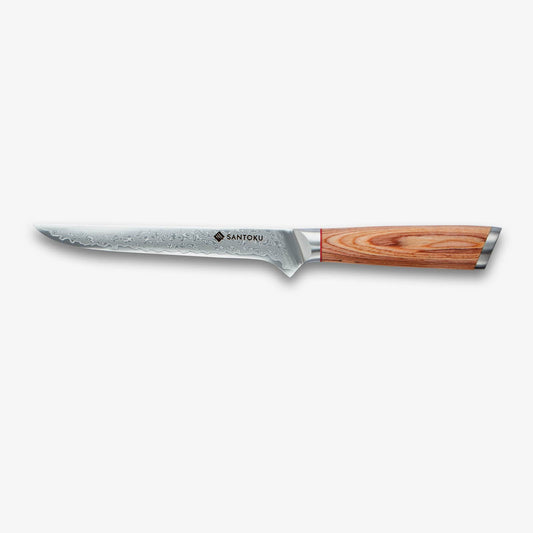
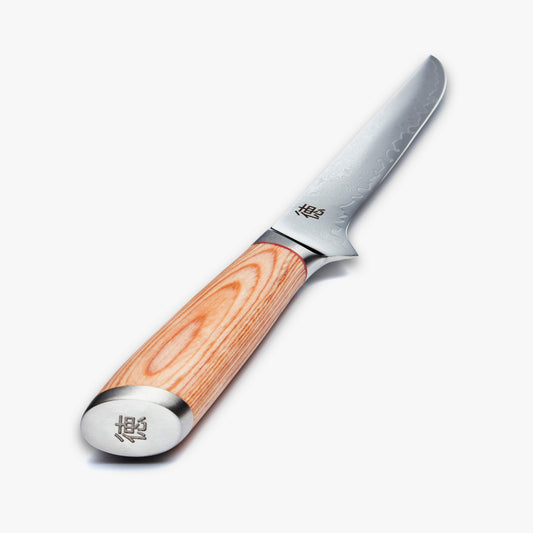
Haruta 6 Inch VG10 Japanese Damascus Steel Boning Knife with Wooden Handle & Scabbard
Regular price £79.99 GBPRegular priceUnit price per -
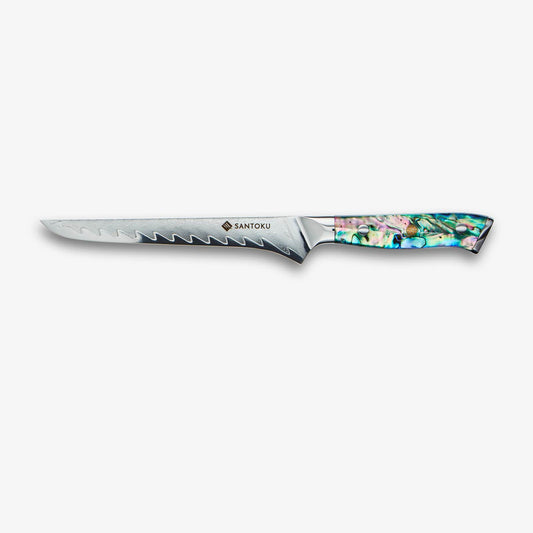
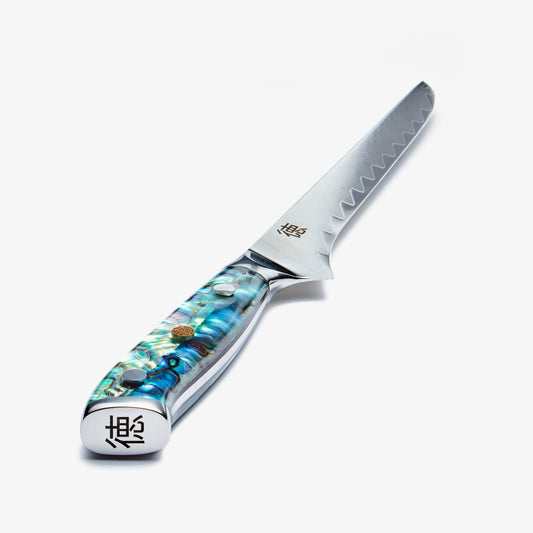
Chikashi 6 inch Boning Knife
Regular price £91.99 GBPRegular priceUnit price per -
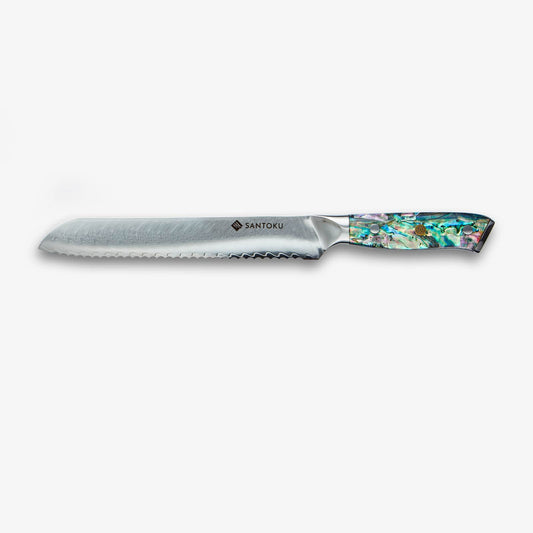
Chikashi 8 inch Bread Knife
Regular price £96.99 GBPRegular priceUnit price per
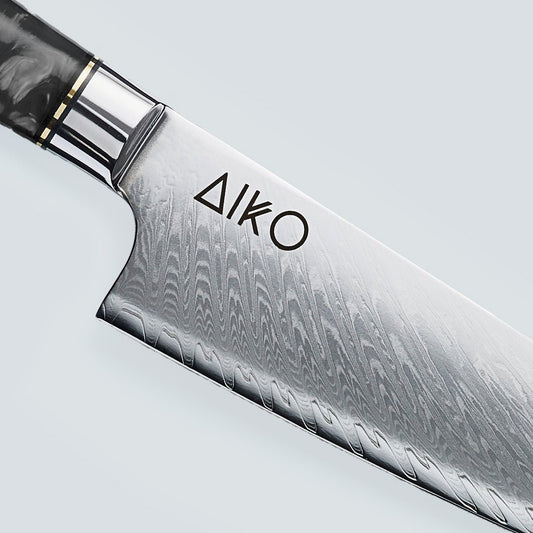
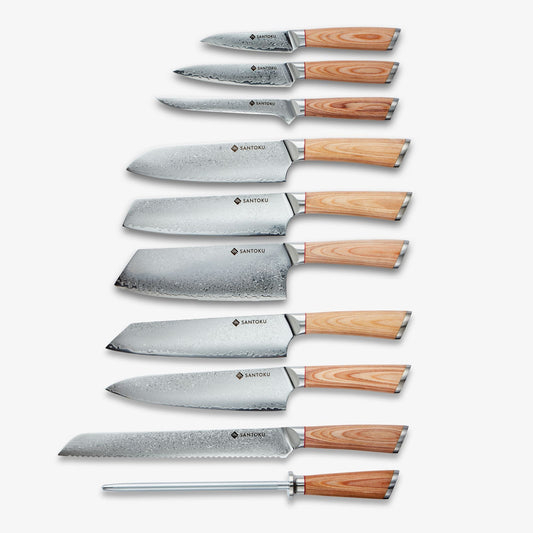
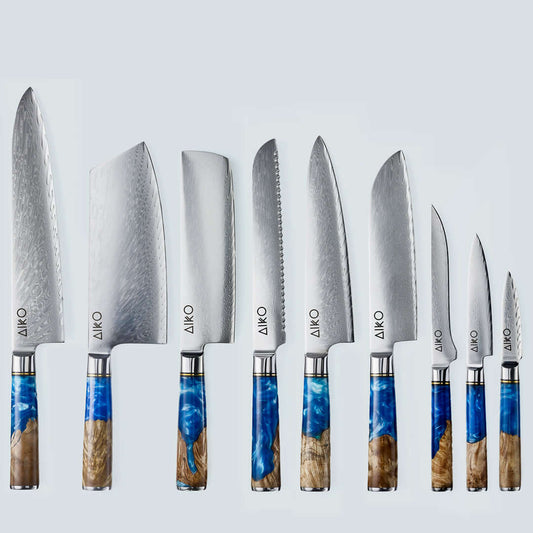
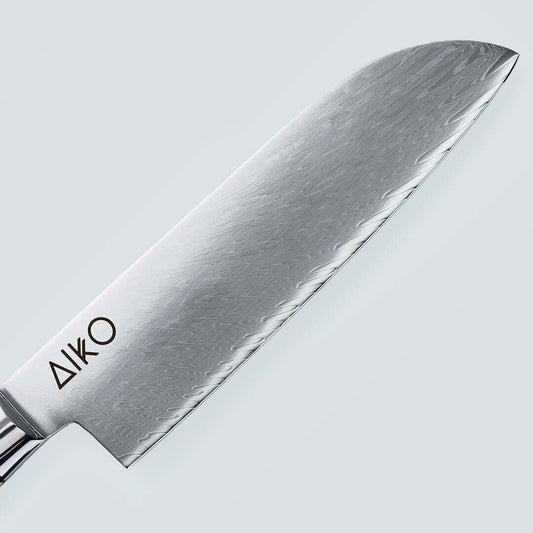
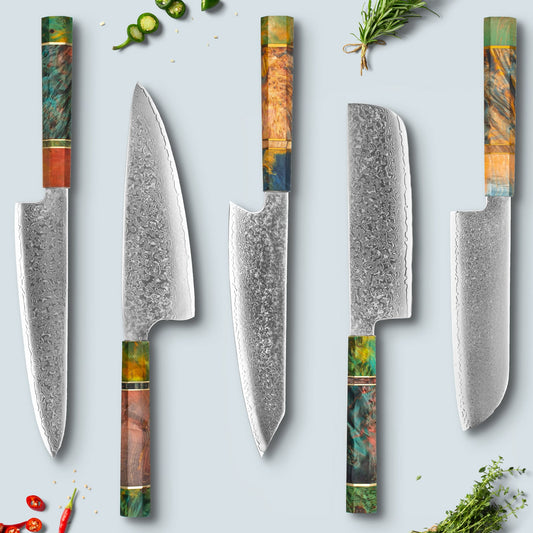
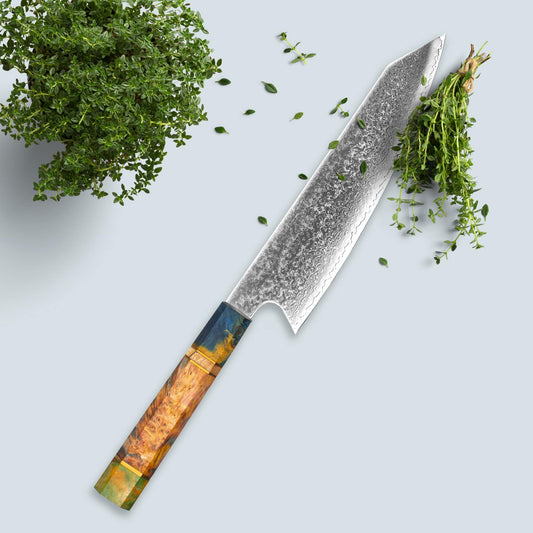
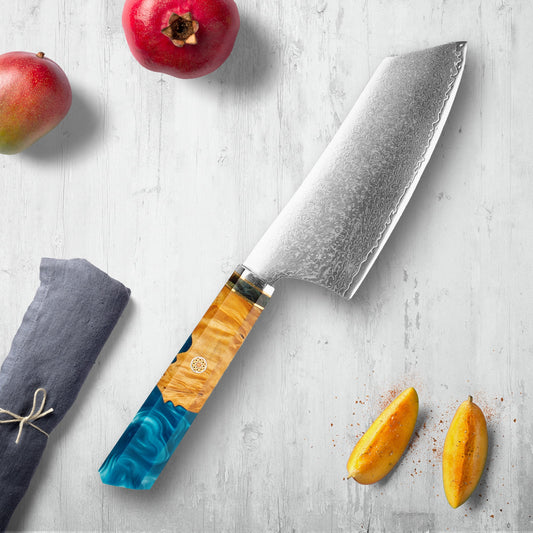
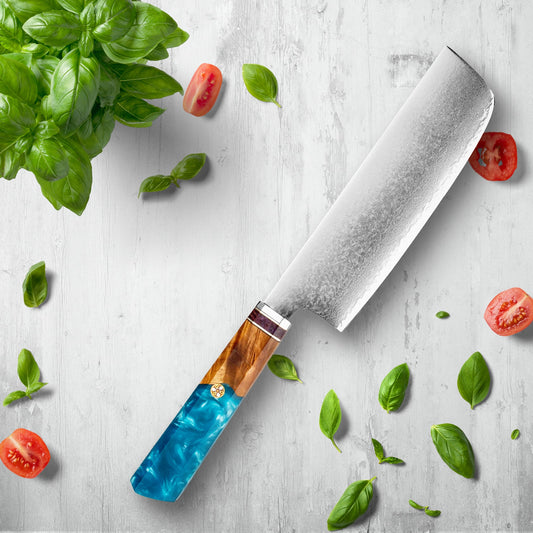
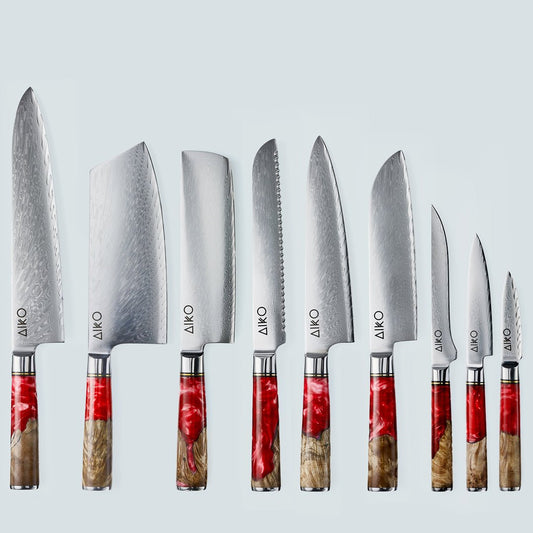
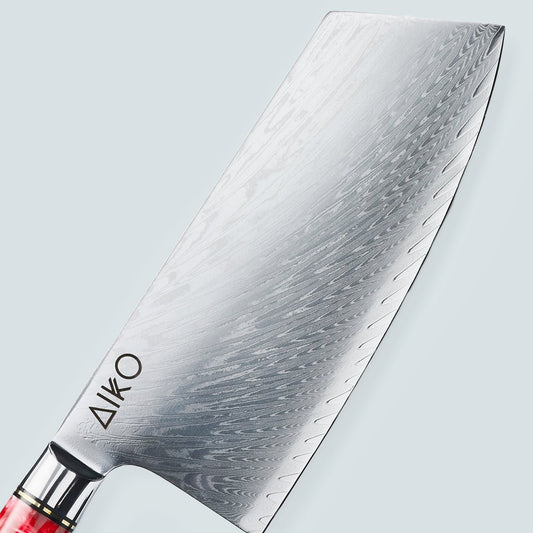
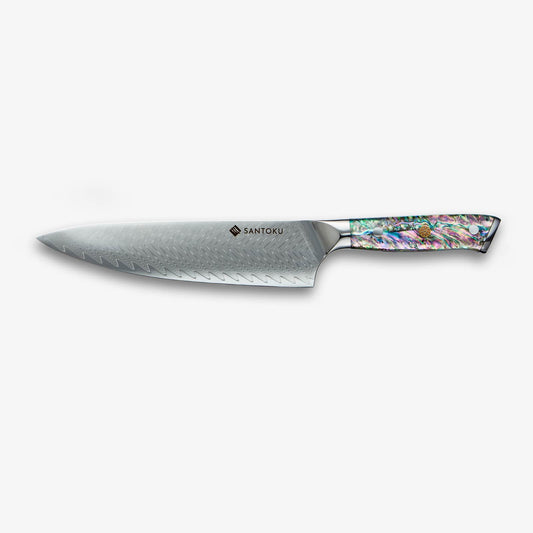
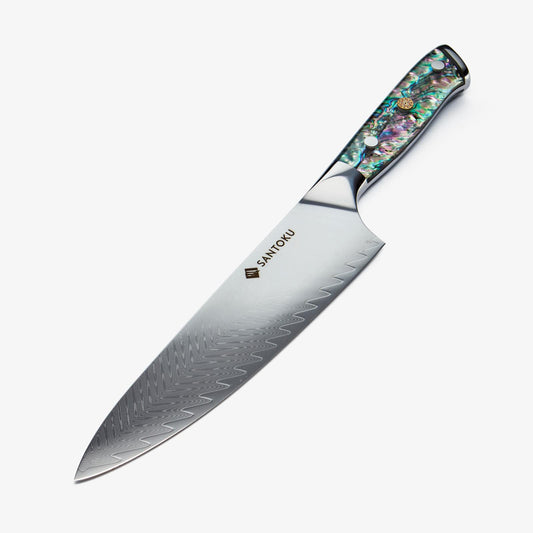
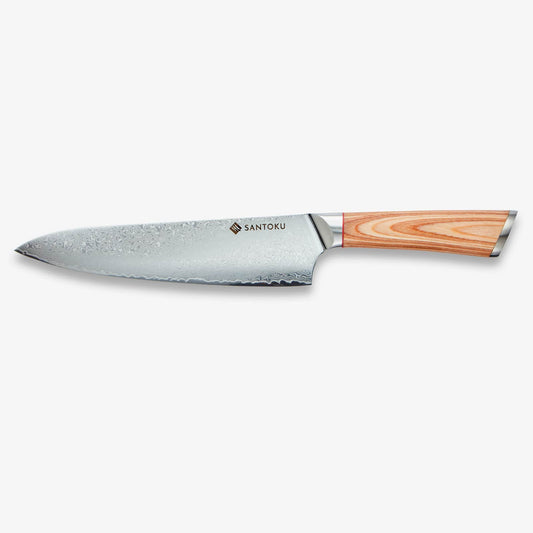
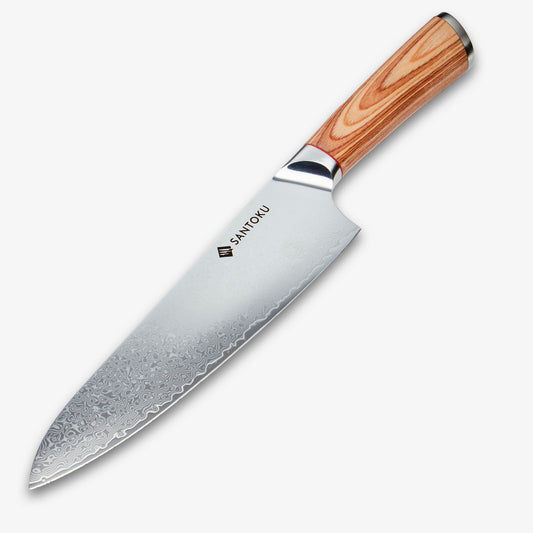
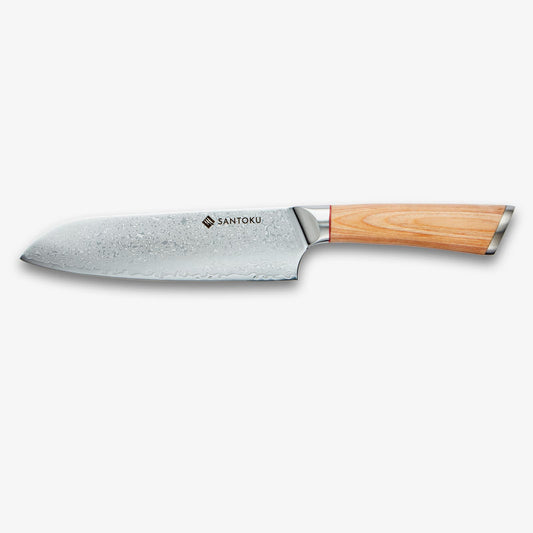
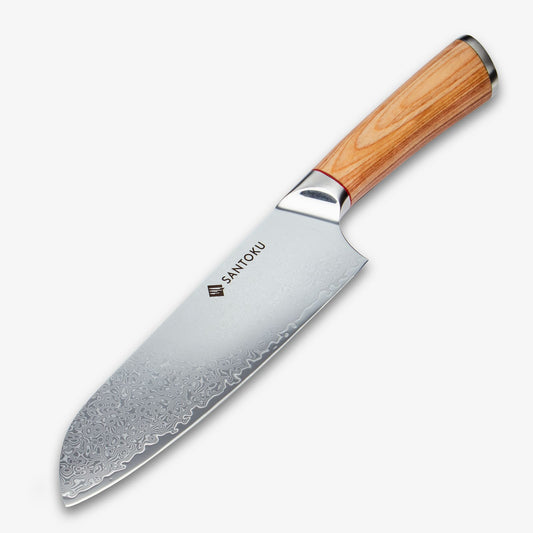

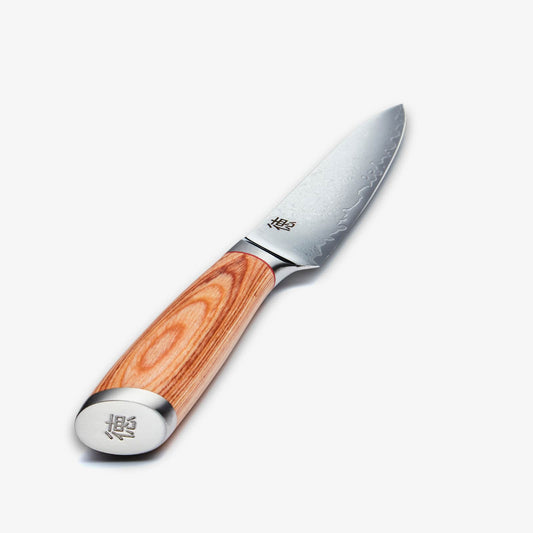
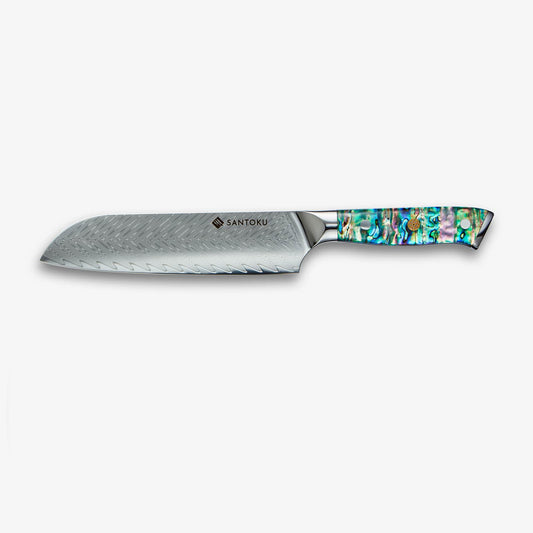
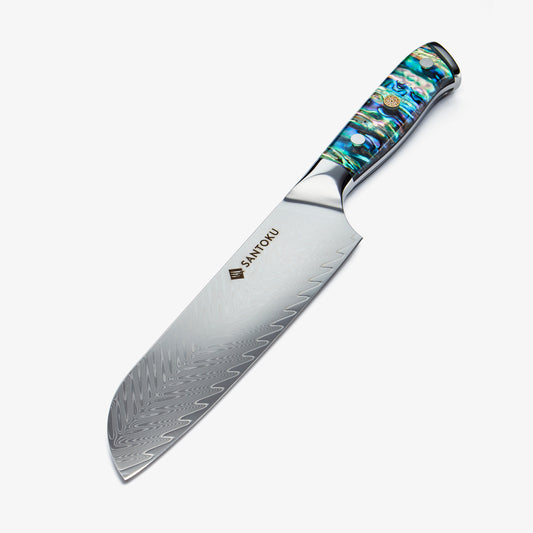
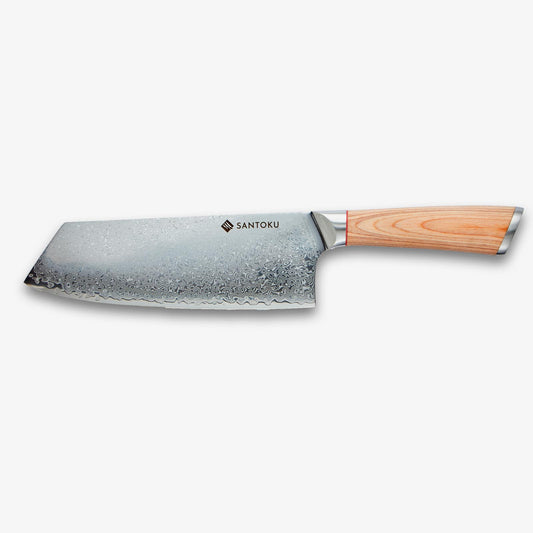


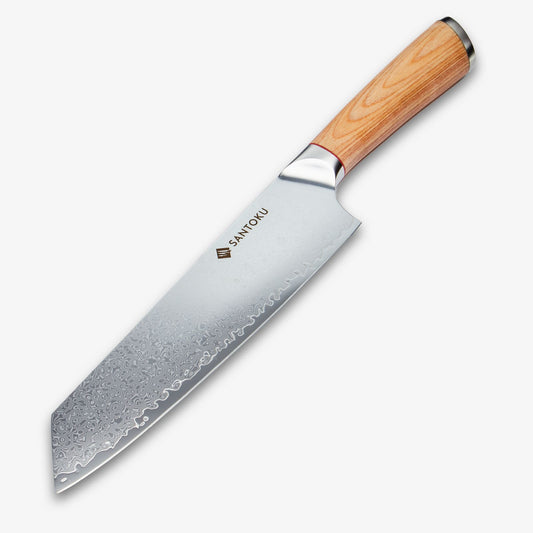

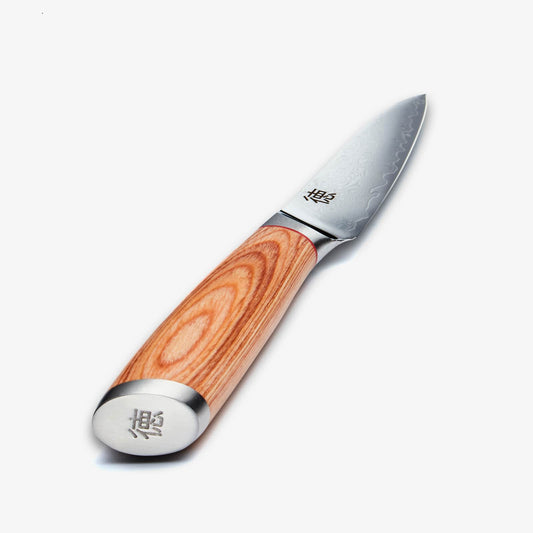
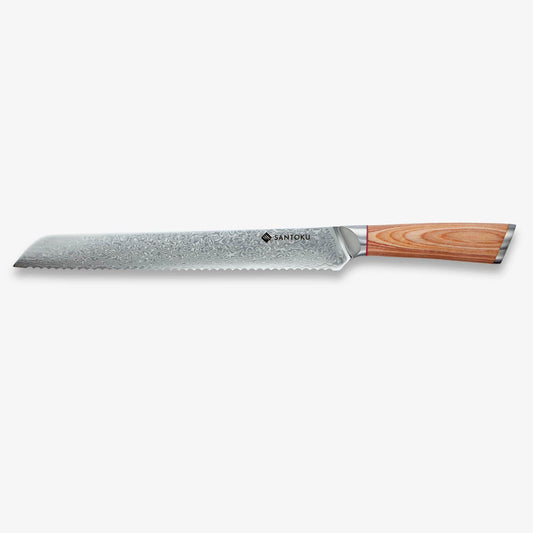
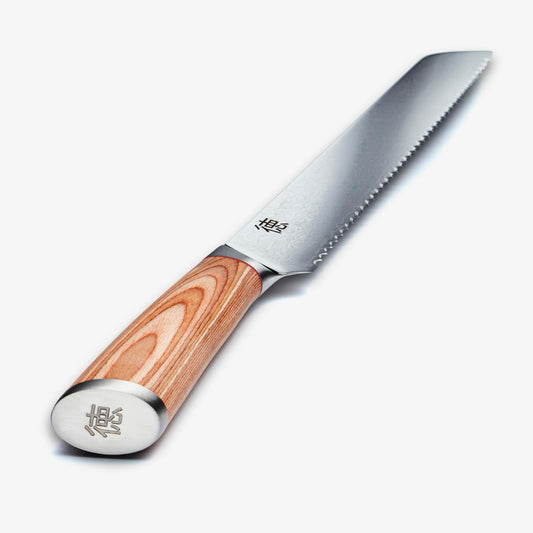
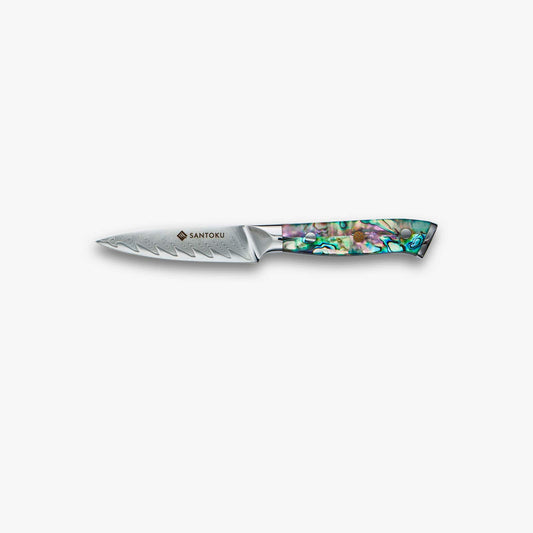
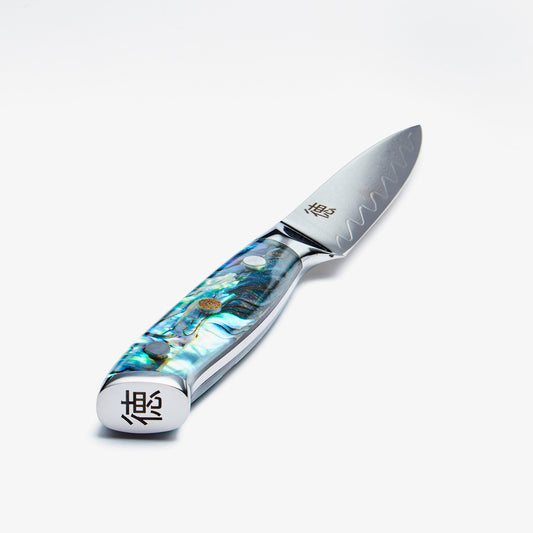
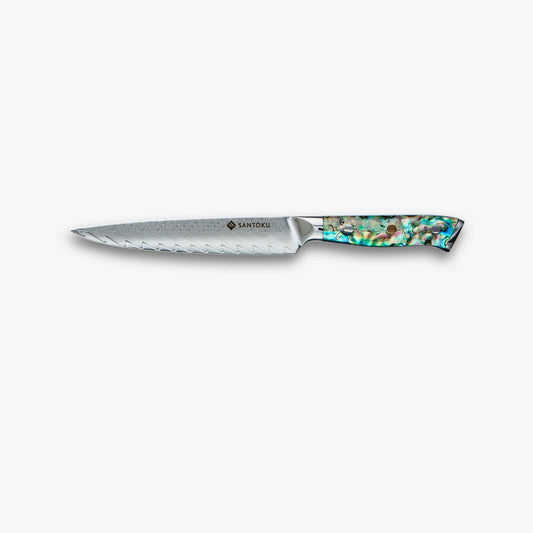
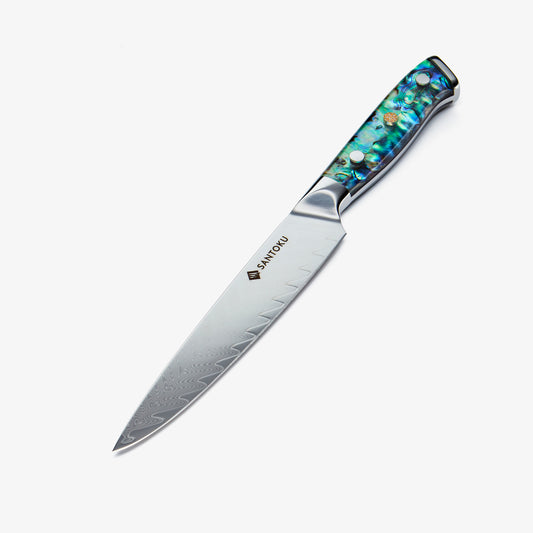
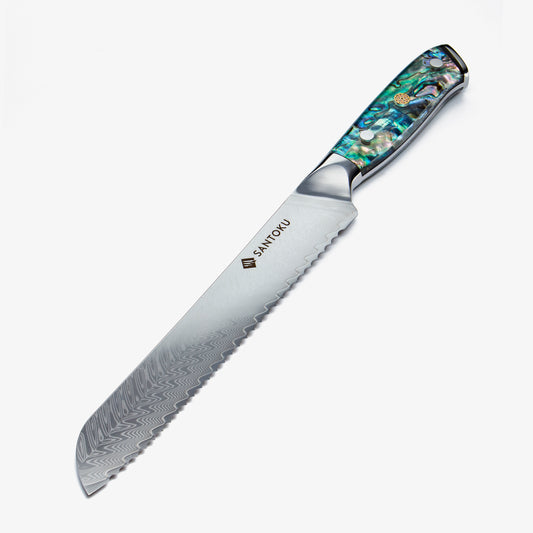
Damascus knives are made by folding layer after layer of softer stainless steel around a hard cutting core — typically 67 layers over a Japanese VG10 or AUS-10 centre at around 60 HRC. The rippled pattern down the blade is where those layers meet, revealed by acid etching. No two are identical.
Is the pattern just decoration?
Mostly, yes — and we would rather say so than pretend otherwise. The cladding is real and it adds some lateral resilience to a hard, brittle core, but the thing doing the cutting is the steel at the very edge, and that is the same VG10 or AUS-10 you would get on a plain blade. Buy Damascus because you want a knife that looks extraordinary on the board and performs to the standard of its core steel — not because the pattern sharpens anything. More on the physics in what is Damascus steel and Damascus vs stainless.
What is in this range
Every blade shape we sell is available in Damascus: santoku and gyuto for everyday prep, nakiri for vegetables, kiritsuke for slicing, plus bread, boning, utility, paring and fruit knives. Handles run from coloured resin through octagonal wood to abalone, and prices start at £64.99 for a single knife.
Choosing between them is mostly about handle and budget, since the steel barely changes across the range. Our best Damascus knives guide compares them properly. If you want the pattern across a whole kitchen, the knife sets run from two-piece boxes to ten-piece collections; if you would rather buy one blade at a time, start with single knives.
Looking after a Damascus edge
Hand-wash and dry it — never the dishwasher. Keep it off glass and ceramic boards. Sharpen on a whetstone at about 15 degrees per side; the pattern sits in the outer cladding, so you are sharpening ordinary steel at the edge and nothing about the technique changes.